Surrogacy in Mexico City
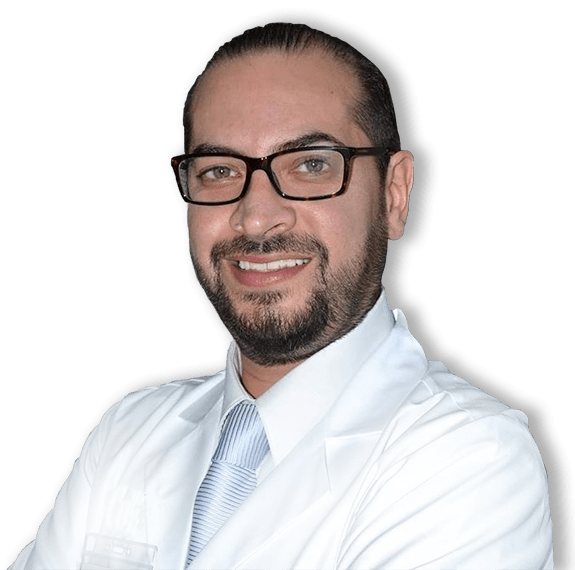
With Dr. Alejandro Castillo Peláez, medical director of the surrogacy program. Gestational surrogacy for intended parents, with the medical treatment and the parentage process coordinated as one program.
Surrogacy in Mexico City with Dr. Castillo Peláez
A full surrogacy journey in the United States runs past $120,000 USD, and Canada effectively bans any compensation, which pushes most families abroad regardless. Mexico City has become one of the clearest alternatives. The medical standard matches North American clinics, the cost is roughly half, and the legal path to being recognised as your child's parents is now confirmed by the Supreme Court.
At Enlistalo Fertilidad, the medical side of the journey is led by Dr. Castillo Peláez himself, as medical director of the surrogacy program. He helps you choose your egg donor if you need one, creates your embryos, performs the transfer to your gestational carrier, and oversees the pregnancy through delivery. The surrogate matching, the notarised agreement, and the court process that places your names on the birth certificate are run by Rafael Guzmán Romero and his legal team, who work inside the same program. You deal with one coordinated group, not four separate agencies.
Key facts
- Surrogacy is legal in Mexico City for international, single and LGBTQ+ intended parents, following the 2021 Supreme Court ruling.
- A complete program typically costs between $55,000 and $75,000 USD, roughly half of the U.S. price, and is paid phase by phase, never all upfront.
- Your baby receives a Mexican birth certificate and Mexican passport, then your home country's passport. We have worked with heterosexual and same-sex couples, as well as single intended parents, from all over the world.
- The intended parents appear on the birth certificate, and the surrogate is never recorded as the mother.
- Dr. Castillo Peláez speaks English fluently. Michaël, the international coordinator, replies within hours.
One coordinated surrogacy program, with no agency in between
Most surrogacy in Mexico is sold through an agency. The agency signs you up, then subcontracts a fertility clinic, a separate law firm, and a coordinator, each adding its own markup and its own communication gap, and you get passed between them for a year and a half.
Here, Dr. Castillo Peláez is the medical director of the surrogacy program and personally performs your reproductive treatment at our partner clinics, Inmater or Procrea, depending on your case. The donor selection, the IVF and embryo creation, the transfer, and the pregnancy follow-up all stay under one doctor who remains accountable for the outcome from the first consultation to the birth. Surrogate management and all legal aspects are handled by Rafael Guzmán Romero and his team, inside the same program, on the same timeline, not outsourced to a company you have to manage on the side.
The price you are quoted is the real price, with no agency layer on top. Your point of contact never changes. And the doctor performing your treatment is the same person answering your medical questions. Many families who reach us were first quoted far more somewhere else, for a much more fragmented process.
Michaël, your coordinator from the first message to the last
A surrogacy journey from another country has more moving parts than any other fertility treatment. There is a donor to choose, a carrier to match, embryos to ship if you already have some abroad, a transfer to sync with your travel, a court process to follow, and the trip home to plan once your baby is born. Michaël, the international coordinator for Dr. Castillo Peláez, keeps all of it on a single timeline and tells you ahead of time what comes next and when each payment is due.
He is a Canadian who went through fertility treatment in Mexico himself and is now a parent. He understands what intended parents from abroad are weighing, the logistics and also the emotional load of doing this far from home. Patients tell us again and again that having Michaël on WhatsApp throughout made an intimidating process feel manageable.
Reach Michaël directly
Is surrogacy legal in Mexico City?
Yes. In 2021, the Supreme Court of Mexico ruled that surrogacy is a constitutionally protected medical procedure and that no one can be excluded on the basis of nationality, marital status, or sexual orientation. That decision applies nationwide.
Mexico City does not have its own dedicated surrogacy statute, so parentage is established through a court-supervised process rather than an automatic registration. In 2026, the Supreme Court settled the question with binding jurisprudence (P./J. 181/2026, published in September 2026). It confirms that in Mexico City, a non-contentious pathway called voluntary jurisdiction (jurisdicción voluntaria) is the proper route to verify a surrogacy agreement signed before a notary, and the family judge's resolution is full proof for the Civil Registry to issue the birth certificate. Because this is now binding on every court, the process is predictable. In practice, the intended parents are placed on the birth certificate and the surrogate is never recorded as the mother. The process generally requires that at least one intended parent has a genetic link to the child.
Rafael Guzmán Romero and the legal team walk you through every step before you sign anything, and the agreement with your carrier is formalised before a notary. We cover the full sequence on our surrogacy legal process page. This is not legal advice for your specific case, your own situation and your home country's rules matter, and we will tell you plainly if Mexico City is not the right fit for you.
Who can pursue surrogacy in Mexico City?
Because the Supreme Court removed restrictions based on who you are, surrogacy in Mexico City is open to a wide range of intended parents. The right program depends on your medical situation and whether you need donor eggs, which is why we offer three versions of the program, with donor eggs, with your own eggs through IVF, or with embryos you already have.
Heterosexual couples facing infertility
For couples who cannot carry a pregnancy safely, after repeated IVF failure, recurrent miscarriage, a hysterectomy, or a medical condition that makes pregnancy dangerous. Embryos are usually created from your own eggs and sperm through IVF.
Gay couples and single fathers
Surrogacy combined with an egg donor is the most common path to biological fatherhood. One or both partners can provide sperm, and the legal process recognises both intended fathers. There is nothing special to arrange. The baby receives a Mexican passport and then the passport of your home country.
Single parents by choice
A single intended parent can build a family here using their own gametes and a donor for whichever is needed. Nationality and marital status are not barriers.
When donor eggs are needed
Dr. Castillo Peláez helps you choose your donor himself, usually during your initial video consultation. He asks about the characteristics that matter to you, such as ethnicity, skin tone, eye and hair color, height and education, along with a recent photo so he can match as closely as possible. Matching donor profiles are then shared with you to choose from. You can choose an 8, 12 or 16 egg package, and you can also work with any international egg bank, in which case our transport partner handles the shipping. More on our donor egg IVF page.
When you already have embryos in another country
Embryos or genetic material stored abroad can be shipped to Mexico City with Tuxkuku, our transport partner, who also handles the COFEPRIS import permits. Shipping usually costs between $90,000.00 and $140,000.00 MXN depending on the country, and in that case the procedures take place at Procrea. You then skip the IVF cycle entirely and go straight to the frozen embryo transfer.
What a surrogacy program includes
A managed program at Enlistalo Fertilidad is organised in five phases, and each phase is paid only when it begins.
Phase 1, Surrogate selection, contract and IVF. Matching with a screened and medically cleared gestational carrier, the notarised agreement, pregnancy insurance with Mutuus, and the IVF cycle with Dr. Castillo Peláez, including ICSI and culture to the blastocyst stage, or the frozen embryo transfer preparation if you already have embryos.
Phase 2, Transfer preparation. Hormonal preparation of your carrier and the embryo transfer.
Phase 3, Prenatal care. Support and compensation for your carrier through each trimester, and the start of the voluntary jurisdiction process.
Phase 4, Pregnancy control. Regular medical evaluations, ultrasounds and medication when needed, from early pregnancy through delivery. This runs at the same time as Phase 3.
Phase 5, Birth, certification and registration. The final legal steps that place your names on the birth certificate.
The pregnancy insurance covers major pregnancy-related expenses starting one month after the contract is signed, including premature birth, late miscarriage, delivery complications and intensive care. Because every journey is different, donor eggs versus your own eggs versus existing embryos, one transfer versus several, Dr. Castillo Peláez and the legal team go over the complete cost with you before you commit to anything. You can also review our detailed surrogacy cost breakdown for Mexico City beforehand.
How much does surrogacy cost in Mexico City?
A complete surrogacy program in Mexico City typically ranges from about $55,000 to $75,000 USD. That is roughly half to a third of the $120,000 and up that the same journey costs in the United States, where surrogate compensation and agency fees alone often exceed the entire Mexican budget.
Our programs are priced in Mexican pesos. The expected total is $1,112,400.00 MXN if you already have embryos, $1,232,400.00 MXN with IVF using your own eggs, and from $1,242,400.00 MXN to $1,462,400.00 MXN with donor eggs, depending on whether you choose 8, 12 or 16 eggs. This covers the carrier's selection, care and compensation, the pregnancy insurance, the IVF and embryo work, the pregnancy follow-up, the coordination, and the legal fees for parentage.
The figure moves mainly with how many embryo transfers it takes to reach a pregnancy, and with a few procedures that only apply if needed, such as a cesarean section, a twin pregnancy, or genetic testing of the embryos. Travel and accommodation are the main costs on top of that. You pay phase by phase, starting with the surrogate selection and contract before signing, so you never pay for the whole journey upfront. There is no waiting list, and nothing is locked in until you have seen the full breakdown in writing.
What does the surrogacy timeline look like?
Most journeys run 14 to 18 months from your first consultation to bringing your baby home, though this varies with matching time and how quickly a transfer succeeds.
Months 1 to 3. Online consultation with Dr. Castillo Peláez, donor selection if needed, carrier matching and contract signing, then the IVF cycle to create your embryos. If your embryos are abroad, this is when they are shipped.
Months 3 to 4. Your carrier is prepared and the embryo transfer takes place. The pregnancy test comes about 10 to 12 days later.
Months 4 to 13. Pregnancy, with prenatal care and medical follow-up through delivery. The legal process starts during the pregnancy, so most of the work is done before your baby arrives.
After the birth. The birth certificate is issued with your names, followed by the Mexican passport and your home country's travel documents.
Your own travel to Mexico City is limited to a few key moments, providing sperm or eggs if needed, and the birth itself. Plan to stay in Mexico City for two to four weeks around the delivery while the documents are prepared. Michaël maps out the full schedule, including every trip and every payment date, once your carrier is matched.
Questions intended parents ask before starting surrogacy in Mexico City
Will both of us be recognised as the legal parents?
Yes. The court process in Mexico City places the intended parents on the birth certificate and the surrogate is never listed as the mother. For same-sex couples, both partners are recognised. Securing your home country's citizenship for the baby is a separate step your legal team helps you prepare for before the birth.
Will our baby be able to travel home with us?
Yes. Your baby receives a Mexican birth certificate and a Mexican passport, and then the passport of your home country. We have worked with heterosexual and same-sex couples, as well as single intended parents, from all over the world, and Michaël helps you plan the trip home once the documents are ready.
How are surrogates screened?
Carriers go through medical, psychological, and background screening before they are matched, and they must have had at least one healthy pregnancy of their own. They are supported medically and financially throughout the pregnancy under a notarised agreement, and they retain full autonomy over their own body at every stage.
How do we choose our egg donor?
Dr. Castillo Peláez guides you himself, usually during the initial video consultation. He asks for your preferred characteristics and a recent photo, then shares matching donor profiles for you to choose from. International donors from any egg bank in the world are also possible.
Do we need to use our own eggs or sperm?
In most cases at least one intended parent should have a genetic link to the child, as this simplifies parentage recognition. Where that is not possible, Dr. Castillo Peláez and the legal team will tell you honestly what your options are, including donor egg IVF, before you commit.
Can we use embryos we already have in another country?
Yes. Tuxkuku ships them to Mexico City and handles the COFEPRIS permits, for about $90,000.00 to $140,000.00 MXN depending on the country. The transfer then takes place at Procrea, and the program cost is lower because no IVF cycle is needed.
What if a transfer does not result in a pregnancy?
Dr. Castillo Peláez reviews the cycle and plans the next transfer. If viable embryos were frozen, a further transfer can be scheduled without repeating the full IVF stimulation, which keeps the added cost down. Your remaining embryos are stored for two months as part of the program, and the quote makes clear from the start what an additional transfer costs.
What happens if there is a complication during the pregnancy?
Every program includes pregnancy insurance with Mutuus. Starting one month after the contract is signed, it covers major pregnancy-related expenses, including premature birth, late miscarriage, delivery complications and intensive care.
When do we pay?
Phase by phase. The first payment, for the surrogate selection, contract and pregnancy insurance, is made before the contract and power of attorney are signed. Each following phase is paid when it begins, and Michaël lets you know ahead of time when each payment is coming.
How do we get started?
Book an online consultation with Dr. Castillo Peláez over Google Meet. He reviews your history, helps with donor selection if you need one, the legal team explains the parentage process, and you get every question answered before you commit to anything.

This article was medically reviewed by
Dr. Alejandro Castillo Peláez
Dr. Castillo is a Gynecologist, Obstetrician and Reproductive Biologist with advanced training across Mexico, the United States and Europe.
He completed his Medical Surgeon’s degree at UNAM, followed by a fellowship in Plastic Surgery for Gynecology at Northwest Memorial Hospital in Houston, where he gained specialized expertise in cosmetic and reconstructive gynecologic procedures.
He later pursued a fellowship in Reproductive Biology and completed a subspecialty in Assisted Reproduction Biology at IVI in Spain — one of the world’s leading fertility institutions.
Today, he treats American and Canadian patients every month across accredited clinics in Mexico City.
🙌 You're not alone — we’re here to guide you
Whether you're comparing clinics, navigating your options, or trying to understand what the next step should be, having clear medical guidance truly makes a difference.
Every patient who reaches out speaks directly with Dr. Alejandro Castillo Peláez or his international coordinator, Michaël — so your questions are answered by the people who are actually involved in your care.
Our role is simple: to help you access safe, transparent and personalized fertility treatment in Mexico, without overwhelm or guesswork.
Meet Dr. Alejandro Castillo Peláez
Dr. Castillo Peláez would like to connect with you for a consultation.
👇🏼 Book a consultation
Get answers to all your questionsabout fertility treatments in Mexico.
Thank you. We'll get in touch with you soon.
and reproductive biologist
Patient stories and testimonials
Read the great reviews from patients who have been fortunate enough to have Dr. Alejandro Castillo as their fertility specialist.