Is IVF Safe in Mexico City? What US and Canadian Patients Should Know
It is a fair question and one Michaël hears often. Patients researching IVF in Mexico frequently ask about safety, both personal safety during travel and clinical safety during treatment. The honest answer is that it depends entirely on where in Mexico you are going, and with whom. Here is what actually matters.
Mexico Is Not One Place

The most common mistake patients make when researching fertility treatment in Mexico is treating the country as a single destination with a single safety profile. Mexico is enormous, and the difference between its major cities is dramatic. Asking whether Mexico is safe is a bit like asking whether the United States is safe: it depends on whether you are going to Midtown Manhattan or a rural stretch of certain southern states.
Enlistalo is based in Mexico City, specifically in the Lomas de Chapultepec area of Miguel Hidalgo. That context matters quite a lot when you are assessing whether to travel for IVF treatment.
Mexico City: What the Safety Picture Actually Looks Like
Mexico City is one of the largest metropolitan areas in the world, with a population of around 22 million people. It functions as the country's political, financial, and medical capital. The neighborhood where Enlistalo's clinic is located, Lomas de Chapultepec, is one of the most established and secure residential areas in the city. It is home to foreign embassies, high-end hospitals, and a large international community of expats and professionals.
In practical terms, the kind of instability that occasionally affects other parts of Mexico simply does not reach this area. The security infrastructure in Mexico City's upscale districts is robust and visible. Patients who come for treatment regularly comment to Michaël on how different the city feels from what they had imagined based on US media coverage of Mexico.
Mexico City also has a world-class medical infrastructure. The city has been attracting international medical tourists for decades, not just for fertility treatment but for cardiology, oncology, orthopedics, and cosmetic surgery. The Inmater hospital network, where Dr. Alejandro Castillo Peláez operates, is a well-established private medical institution in the city that meets the standards expected by international patients.
A Recent Example Worth Understanding: Puerto Vallarta in February 2026
In late February 2026, tourists traveling to the Puerto Vallarta and Nuevo Vallarta area of Jalisco state found themselves in the middle of a serious security situation. On February 22, the Mexican army killed Nemesio Oseguera Cervantes, known as El Mencho, the leader of the Jalisco New Generation Cartel (CJNG) (NBC News). The cartel retaliated almost immediately with coordinated violence across Jalisco and neighboring states: vehicles burned, highways blocked, gunshots audible in urban areas, and Puerto Vallarta's international airport closed for two days.
Tourists were stranded. Flights in and out were suspended (ABC News). Canadians sheltered in their hotel rooms after Canadian embassy warnings to stay inside. The Jalisco state governor advised residents to remain home until further notice. At least 25 National Guard members were killed in subsequent days of clashes, along with several civilians.
LIV Fertility Center, a competing IVF clinic that markets itself heavily to US and Canadian patients, is located in Nuevo Vallarta, roughly 15 minutes from the Puerto Vallarta airport, directly in the area where this violence unfolded. Patients mid-cycle or traveling for treatment during that window had no way to access the clinic, no way to fly home, and no framework for what their treatment continuity would look like.
This is not a criticism of LIV as a clinic. It is an illustration of why the location question matters independently of the clinical question. A fertility cycle has time-sensitive steps. If you cannot get to the clinic, or cannot leave the country, on a particular day, the medical consequences are real.
Mexico City was not affected by those events. CDMX is over 500 kilometers from Jalisco. The cartel activity that triggered the Puerto Vallarta situation is specific to the CJNG's territorial stronghold in western Mexico. It has no footprint in Mexico City's medical district.
The Clinical Safety Question
Beyond personal safety during travel, patients also ask about clinical standards: are the labs, the medications, the protocols, and the doctors equivalent to what they would find in the US or Canada?
Dr. Castillo's Training and Credentials
Dr. Alejandro Castillo Peláez is a reproductive endocrinologist trained in Mexico and with international clinical experience. He operates within the Inmater network, which applies institutional protocols and quality standards to every cycle. He is not a general practitioner offering IVF as a side service. Reproductive medicine is his specialty, and the patients he treats are largely international, which means his team is structured around the coordination needs and communication expectations of US and Canadian patients specifically.
Laboratory Standards
The embryology laboratory at Enlistalo uses the same core technologies as laboratories in the US and Canada: time-lapse incubation, vitrification for embryo freezing, and next-generation sequencing for PGT-A genetic testing. The clinical outcomes these tools produce are not geographically dependent. An euploid embryo frozen in Mexico City is the same as one frozen in Los Angeles or Toronto.
Medications
The hormone medications used in IVF stimulation protocols in Mexico are the same pharmaceutical products used in the US and Canada, manufactured by the same companies. Patients sometimes worry about counterfeit medications, which is a legitimate concern in some contexts, but not in a regulated private fertility clinic operating within a major urban hospital network.
Communication and Continuity
One of the real practical differences between IVF in Mexico and IVF at a large US clinic is the level of direct access patients have to their doctor and coordinator. At many US fertility chains, you may rarely speak directly to the reproductive endocrinologist managing your case. At Enlistalo, Dr. Castillo handles your case personally and Michaël manages all coordination directly. Patients who have been through IVF at large US clinics often find the communication at Enlistalo more personal, not less.
What to Look for When Evaluating Any Clinic in Mexico
Not every clinic offering IVF in Mexico operates to the same standard. If you are comparing options, here are the questions worth asking:
- Where exactly is the clinic located, and what is the security situation in that specific area?
- Is the doctor a trained reproductive endocrinologist, or a general OB/GYN offering IVF?
- Does the clinic have a dedicated embryology laboratory on site, or does it outsource lab work?
- What happens if there is a travel disruption mid-cycle? Is there a contingency protocol?
- Are the medications sourced from registered pharmaceutical suppliers?
- Can you speak directly with the doctor before committing to treatment?
Michaël is happy to answer all of these questions directly for Enlistalo. You can also read our guide on choosing the best IVF clinic in Mexico for a broader breakdown of what to look for.
What Patients From the US and Canada Actually Experience
The patients Michaël coordinates from the US and Canada consistently describe Mexico City as more comfortable and easier to navigate than they expected. The Lomas de Chapultepec neighborhood has reliable transport, good hotels at various price points, restaurants catering to international visitors, and easy access to the clinic. The airport in Mexico City, Benito Juárez International, has direct flights from most major US and Canadian cities.
For context on what the trip actually involves, including how many visits are required and how monitoring between visits works, see our pre-treatment testing guide.
Frequently Asked Questions
Is it safe to travel to Mexico City for IVF?
Yes. Mexico City, and specifically the Lomas de Chapultepec area where Enlistalo is located, is a well-secured international medical district with a long history of receiving foreign patients. The security situation there is not comparable to coastal resort areas or border states that receive more media coverage.
What about the cartel violence I have seen in the news?
The violence that makes international headlines is almost always concentrated in specific states and territories, primarily areas where cartels compete for trafficking routes. Mexico City's medical district is not one of those areas. The February 2026 violence in Jalisco, for example, had no presence in Mexico City. They are different regions with different security profiles.
Are Mexican fertility clinics regulated?
Private fertility clinics in Mexico operate under the oversight of COFEPRIS, Mexico's federal health regulatory authority. The standards applied to laboratory practices, medication handling, and clinical procedures at regulated private clinics are substantive. Enlistalo operates within the Inmater network, which adds an institutional layer of oversight above the regulatory baseline.
Will my doctor speak English?
Yes. Dr. Castillo and Michaël both work in English with international patients as a matter of course. All written communications, test result reviews, protocol explanations, and follow-up consultations are conducted in English. You can also browse our guide to IVF clinics with English-speaking doctors in Mexico for context on what to expect at other clinics.
What if something goes wrong mid-cycle and I need to leave Mexico?
Embryos can be frozen at any stage of a cycle and stored securely while you are back home. If a transfer needs to be rescheduled for any reason, including travel disruptions, that is a standard situation that Dr. Castillo's team has managed before. Michaël handles the logistics around any rescheduling. The frozen embryo transfer protocol specifically exists to decouple the retrieval phase from the transfer phase, which gives patients flexibility that a fresh transfer cycle does not.
How does Enlistalo compare to clinics in Puerto Vallarta or Cancun?
Resort-area clinics can be appealing because you can combine treatment with a vacation. The tradeoff is that resort areas have less stable security profiles than major metropolitan medical centers, as the events of February 2026 in Jalisco demonstrated clearly. Mexico City is not a beach destination, but it is a serious international city with a serious medical infrastructure, which is a different proposition for someone traveling specifically for fertility treatment.
Next Steps
Step 1: Talk to Michaël Before You Decide
The best way to get a real picture of what treatment at Enlistalo looks like is to talk to someone who coordinates it every day. Book a free consultation and Michaël will walk you through the process, the logistics, and what a realistic timeline looks like for your situation.
Step 2: Review Dr. Castillo's Background
If clinical credentials matter to you, which they should, you can review Dr. Castillo's full profile before your consultation. His training, specializations, and the network he operates within are all laid out there.
Step 3: Understand the Full Cost Picture
Safety and quality are only part of the decision. Most patients come to Mexico City because the cost of IVF in Mexico City is substantially lower than in the US or Canada, even after factoring in travel. Getting a clear cost breakdown early in the process helps avoid surprises later.
This article was medically reviewed by
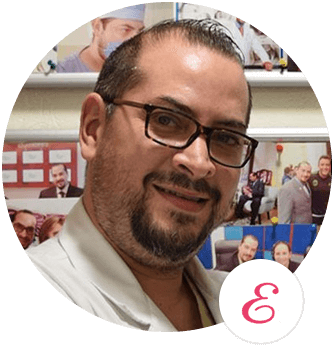
Dr. Alejandro Castillo Peláez
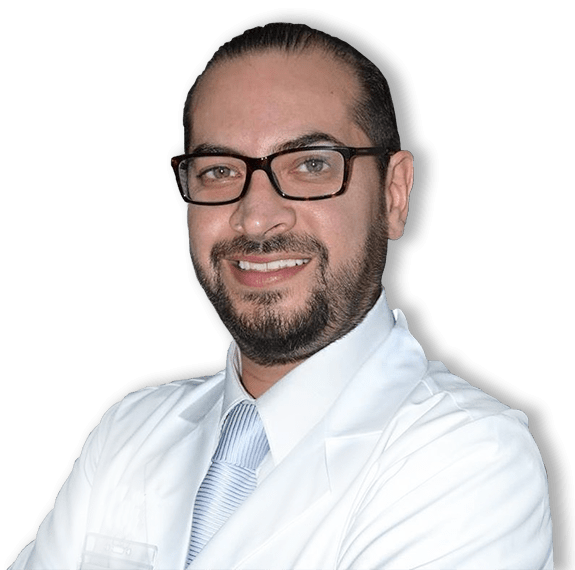
Dr. Castillo is a Gynecologist, Obstetrician and Reproductive Biologist with advanced training across Mexico, the United States and Europe.
He completed his Medical Surgeon’s degree at UNAM, followed by a fellowship in Plastic Surgery for Gynecology at Northwest Memorial Hospital in Houston, where he gained specialized expertise in cosmetic and reconstructive gynecologic procedures.
He later pursued a fellowship in Reproductive Biology and completed a subspecialty in Assisted Reproduction Biology at IVI in Spain — one of the world’s leading fertility institutions.
Today, he treats American and Canadian patients every month across accredited clinics in Mexico City.
🙌 You're not alone — we’re here to guide you
Whether you're comparing clinics, navigating your options, or trying to understand what the next step should be, having clear medical guidance truly makes a difference.
Every patient who reaches out speaks directly with Dr. Alejandro Castillo Peláez or his international coordinator, Michaël — so your questions are answered by the people who are actually involved in your care.
Our role is simple: to help you access safe, transparent and personalized fertility treatment in Mexico, without overwhelm or guesswork.
Meet Dr. Alejandro Castillo Peláez
Dr. Castillo Peláez would like to connect with you for a consultation.
👇🏼 Book a consultation
Get answers to all your questionsabout fertility treatments in Mexico.
Thank you. We'll get in touch with you soon.
and reproductive biologist
Patient stories and testimonials
Read the great reviews from patients who have been fortunate enough to have Dr. Alejandro Castillo as their fertility specialist.