PGT-M in Mexico City: IVF Screening for Sickle Cell, Cystic Fibrosis and Inherited Disease
PGT-M is preimplantation genetic testing for monogenic disease. It is used during IVF by couples who carry a known hereditary condition and want to avoid passing it on. It is more involved than standard chromosomal screening, it costs more, and it requires advance preparation. This guide explains what it involves at Enlistalo, which conditions can be tested, and what the realistic cost looks like compared to doing the same thing in the US or Canada.
PGT-M vs PGT-A: The Difference That Matters
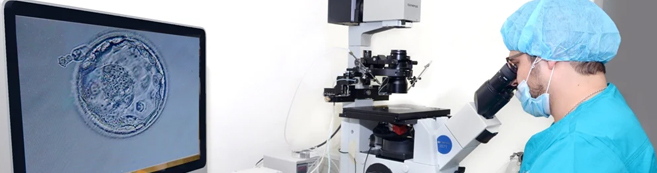
Most people researching genetic testing during IVF are thinking about PGT-A, which screens embryos for chromosomal abnormalities like Down syndrome. PGT-A is a population-level test: it counts chromosomes in every embryo and flags those with the wrong number.
PGT-M is different. It is designed for couples who already know they carry a specific genetic mutation, something inherited, something identified through prior carrier screening or family history, and who want to test each embryo for that exact condition before deciding which one to transfer.
The critical distinction is that PGT-M requires a custom-built probe. Before the IVF cycle begins, a genetics laboratory creates a test designed specifically for your mutation. That takes time and adds cost. But for couples who carry conditions like sickle cell disease, cystic fibrosis, or Huntington's, it is the only way to know with confidence which embryos are unaffected before transfer.
Conditions PGT-M Can Screen For
PGT-M can be designed for any single-gene disorder where the causative mutation has been identified. The most common conditions tested at fertility clinics internationally include:
- Sickle cell disease (HBB gene mutation) — one of the most frequently requested tests among couples of African, Caribbean, Middle Eastern, or Mediterranean heritage
- Cystic fibrosis (CFTR gene) — the most common serious recessive condition in patients of Northern European background
- Tay-Sachs disease — most prevalent in Ashkenazi Jewish, French Canadian, and Cajun populations
- Huntington's disease — an autosomal dominant condition where an affected parent has a 50% chance of passing it on
- Spinal muscular atrophy (SMA) (SMN1 gene) — one of the leading genetic causes of infant death
- Fragile X syndrome (FMR1 gene) — the most common inherited cause of intellectual disability
- Duchenne muscular dystrophy (DMD gene) — X-linked, primarily affecting boys
- Hemophilia A and B — X-linked bleeding disorders
- Beta-thalassemia — hereditary anemia most common in Mediterranean, Middle Eastern, and South Asian families
- BRCA1 / BRCA2 — hereditary breast and ovarian cancer mutations
This list covers the most frequently tested conditions but is not exhaustive. If you carry a condition not listed here, Michaël can confirm whether a probe can be designed for your specific mutation before you proceed.
How PGT-M Works: The Step-by-Step Process
Step 1: Pre-cycle genetic workup (4 to 8 weeks before retrieval)
Before your IVF cycle begins, both partners need to provide a DNA sample, usually a blood draw or saliva sample. These samples go to the genetics laboratory so a custom probe can be built for your specific mutation. This probe design phase takes roughly 4 to 8 weeks and cannot be rushed. It is the reason PGT-M requires more lead time than a standard IVF cycle. If you already have documented carrier screening results from a previous test, that speeds up the process.
Step 2: IVF stimulation and egg retrieval
The IVF cycle itself proceeds exactly as it would for any patient. Dr. Castillo manages ovarian stimulation, monitors follicle development through ultrasound and bloodwork, and performs the egg retrieval under sedation. Eggs are then fertilized using ICSI in the Enlistalo embryology laboratory.
Step 3: Embryo culture to blastocyst stage (day 5 or 6)
Fertilized eggs are cultured in the laboratory until they reach the blastocyst stage, typically day 5 or 6. At this point, the embryo has differentiated enough that a small number of cells can be biopsied from the trophectoderm, the outer layer that would eventually form the placenta. This biopsy does not touch the inner cell mass that becomes the baby.
Step 4: Embryo biopsy and vitrification
The embryologist takes a biopsy of 5 to 10 cells from each blastocyst. The biopsied cells are sent to the genetics laboratory. The embryos themselves are immediately vitrified (frozen) and held in storage while results are processed. This means the transfer always takes place in a subsequent frozen embryo transfer (FET) cycle, not in the same cycle as the retrieval.
Step 5: Lab analysis and results
The genetics laboratory runs the biopsied cells against the custom probe built for your mutation. Results typically return within 10 to 14 days. The report classifies each embryo as unaffected, a carrier, or affected by the condition. Depending on the inheritance pattern of the disease, carrier embryos may still be viable for transfer. Dr. Castillo and Michaël walk through the results with you before any transfer decision is made.
Step 6: Frozen embryo transfer
Once results are in and an embryo is selected, a frozen embryo transfer cycle begins. The uterine lining is prepared with hormonal support, and the selected embryo is thawed and transferred. Most patients require only one visit to Mexico City for the transfer itself, since lining preparation can be monitored remotely by your local doctor.
PGT-M Cost in Mexico City vs the US and Canada
PGT-M is significantly more expensive than PGT-A because of the custom probe design. In the US, the genetics laboratory fee alone for PGT-M typically runs between $7,000 and $12,000, on top of the base IVF cycle cost. When you add the IVF cycle, medications, and embryo transfer, total costs in the US frequently exceed $35,000 to $40,000 for a single round of PGT-M IVF.
In Mexico City, the same treatment structure costs substantially less. The table below gives a realistic comparison. Note that PGT-M pricing at Enlistalo is confirmed during your consultation, since the probe design cost varies by condition and laboratory.
| Cost component | United States | Canada | Enlistalo Mexico City |
|---|---|---|---|
| Base IVF cycle + ICSI | $15,000 – $20,000 USD | $10,000 – $15,000 CAD | $7,000 USD |
| Ovarian stimulation medications | $3,000 – $6,000 USD | $3,000 – $5,000 CAD | $1,500 – $3,500 USD |
| PGT-M probe design + testing | $7,000 – $12,000 USD | $6,000 – $10,000 CAD | $8,000 – $10,000 USD |
| Frozen embryo transfer (FET) | $3,000 – $5,000 USD | $3,000 – $4,000 CAD | $2,500 USD |
| Annual egg / embryo storage | $500 – $1,000 USD | $500 – $800 CAD | $350 USD |
The savings on the base IVF cycle and medications alone often cover a significant portion of travel costs. For patients doing multiple rounds, the cumulative difference becomes substantial.
Who Should Consider PGT-M
PGT-M is not for every IVF patient. It is specifically designed for people who have a documented reason to test for a known hereditary condition. The situations where it is most clearly indicated are:
- Both partners are confirmed carriers of the same recessive condition (sickle cell, cystic fibrosis, Tay-Sachs, beta-thalassemia, SMA)
- One partner has an autosomal dominant condition with a 50% transmission risk (Huntington's disease, BRCA mutations)
- A previous pregnancy or child was affected by a single-gene disorder
- Carrier status was identified through population-level carrier screening before starting IVF
- One partner is an X-linked carrier (hemophilia, Duchenne muscular dystrophy) and wants to avoid transferring an affected male embryo
If you have had carrier screening done by your GP or a genetic counselor and want to discuss what the results mean for your IVF options, Michaël can connect you with Dr. Castillo for a clinical review before you commit to anything.
Combining PGT-M with PGT-A
Some patients choose to run both PGT-M and PGT-A on the same embryo biopsy. This tests each embryo simultaneously for the known hereditary condition and for chromosomal number abnormalities. The practical benefit is that it gives you the most complete picture before transfer: an embryo that is unaffected by your specific mutation but chromosomally abnormal still carries a high miscarriage risk. Running both tests at once adds cost but avoids the situation of transferring a genetically clear embryo that then fails due to an undetected aneuploidy.
Whether combined testing makes sense for your situation depends on your age, how many embryos you are likely to produce, and whether the additional cost is justified. Dr. Castillo covers this in detail during the initial consultation.
Practical Logistics for International Patients
Because PGT-M requires probe design before the cycle, international patients need to plan ahead more carefully than they would for a standard IVF cycle. Here is the realistic sequence:
- Book an initial consultation with Michaël. Bring or send your existing carrier screening results if you have them.
- Submit DNA samples for probe design. This can often be done through a local lab before you travel.
- Allow 4 to 8 weeks for probe design to complete.
- Travel to Mexico City for the stimulation monitoring and egg retrieval phase.
- Return home while embryos are frozen and lab results are processed (10 to 14 days).
- Return to Mexico City for the frozen embryo transfer, or in some cases the lining monitoring can be done locally with the transfer being the only required visit.
Most international patients make two trips. The first for retrieval, the second for transfer. Between them, Michaël handles all communication, result reviews, and scheduling. See our pre-treatment testing guide for a full breakdown of what to bring and what can be done at home before you travel.
Frequently Asked Questions
What is the difference between PGT-M and PGT-A?
PGT-A screens all embryos for the wrong number of chromosomes. It is recommended for women over 35, those with recurrent miscarriage, or anyone who wants to maximize transfer success rates. PGT-M screens for one specific genetic mutation that is already known to be present in the family. You need a documented reason to use PGT-M. Many patients do both simultaneously on the same biopsy.
Does PGT-M guarantee the baby will be unaffected?
PGT-M has a very high accuracy rate, typically above 98%, for the specific mutation it is designed to detect. It does not screen for every possible genetic condition, only the one it was built for. Prenatal testing during pregnancy is still recommended even after a successful PGT-M cycle, as standard practice regardless of the test result.
How long does probe design take?
Typically 4 to 8 weeks from the time DNA samples are received by the genetics laboratory. This is the main reason PGT-M cycles require more advance planning than standard IVF. If you already have documented genetic test results from a previous screening, the lead time can sometimes be reduced.
Can PGT-M be done for BRCA mutations?
Yes. BRCA1 and BRCA2 testing is one of the more frequently requested PGT-M applications. Couples where one partner carries a BRCA mutation and wants to avoid passing it on to a child can have embryos tested before transfer. This is legal and available in Mexico City. It is worth discussing with Dr. Castillo whether this is the right approach for your specific situation.
What happens if none of the embryos are unaffected?
This outcome does occur in some cycles, particularly with recessive conditions where both partners are carriers, since statistically 25% of embryos will be affected, 50% carriers, and 25% fully unaffected. If no unaffected embryos are available from the first retrieval, options include a second retrieval cycle to generate more embryos, transferring a carrier embryo (which will not develop the condition), or using donor eggs or sperm depending on which partner carries the mutation. Dr. Castillo reviews these scenarios with every PGT-M patient during the initial consultation.
Is PGT-M legal in Mexico City?
Yes. Preimplantation genetic testing for hereditary disease is legal and practiced at regulated private fertility clinics in Mexico City. There are no restrictions on PGT-M for the conditions listed in this guide. The genetics laboratory work is typically performed by a specialized external lab, either within Mexico City or internationally, with results reported back to Dr. Castillo's team before any transfer decision is made.
How does this compare to doing PGT-M in the US?
The clinical process is identical. The same probe design methodology, the same biopsy technique, the same laboratory analysis approach. The difference is cost. In the US, the combination of IVF and PGT-M commonly exceeds $35,000 per round. In Mexico City with Enlistalo, the total cost for the same treatment is substantially lower. For couples who may need more than one retrieval cycle to find unaffected embryos, that gap compounds quickly.
Next Steps
Step 1: Share your carrier screening results with Michaël
If you already have documented carrier testing results, send them to Michaël before booking a consultation. Knowing your specific mutation in advance allows Dr. Castillo to confirm whether a probe can be designed and give you a realistic timeline and cost estimate before you make any commitments. Book a free consultation here.
Step 2: Review the full IVF cost picture
PGT-M is an add-on to a standard IVF cycle, not a standalone treatment. Understanding the base IVF cost in Mexico City first gives you the full picture of what to budget for.
Step 3: Read the pre-treatment testing guide
Most of the preparatory bloodwork and genetic samples required before a PGT-M cycle can be done at home through your local lab before you travel to Mexico City. Our guide to tests before IVF in Mexico City covers exactly what can be done locally and what requires an in-person visit.

This article was medically reviewed by
Dr. Alejandro Castillo Peláez
Dr. Castillo is a Gynecologist, Obstetrician and Reproductive Biologist with advanced training across Mexico, the United States and Europe.
He completed his Medical Surgeon’s degree at UNAM, followed by a fellowship in Plastic Surgery for Gynecology at Northwest Memorial Hospital in Houston, where he gained specialized expertise in cosmetic and reconstructive gynecologic procedures.
He later pursued a fellowship in Reproductive Biology and completed a subspecialty in Assisted Reproduction Biology at IVI in Spain — one of the world’s leading fertility institutions.
Today, he treats American and Canadian patients every month across accredited clinics in Mexico City.
🙌 You're not alone — we’re here to guide you
Whether you're comparing clinics, navigating your options, or trying to understand what the next step should be, having clear medical guidance truly makes a difference.
Every patient who reaches out speaks directly with Dr. Alejandro Castillo Peláez or his international coordinator, Michaël — so your questions are answered by the people who are actually involved in your care.
Our role is simple: to help you access safe, transparent and personalized fertility treatment in Mexico, without overwhelm or guesswork.
Meet Dr. Alejandro Castillo Peláez
Dr. Castillo Peláez would like to connect with you for a consultation.
👇🏼 Book a consultation
Get answers to all your questionsabout fertility treatments in Mexico.
Thank you. We'll get in touch with you soon.

and reproductive biologist
Patient stories and testimonials
Read the great reviews from patients who have been fortunate enough to have Dr. Alejandro Castillo as their fertility specialist.