PGD in Mexico City: Genetic Testing During IVF for Hereditary Disease and Chromosomal Abnormalities
Preimplantation genetic diagnosis, PGD, is the process of testing embryos created through IVF before any transfer takes place. It gives couples the ability to select embryos that are free of a specific inherited condition, chromosomally normal, or both.
What PGD Means Today, and Why the Terminology Has Changed
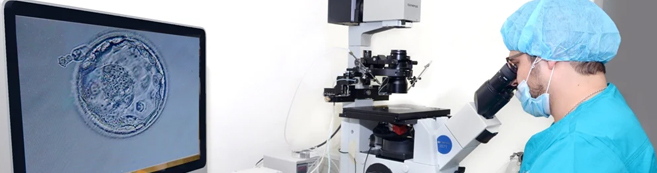
PGD is the term most patients arrive with. It was the standard name used in fertility medicine for decades, and it remains what most people type into a search engine when they are researching genetic testing during IVF.
Clinically, however, the field has moved to a more precise naming system. Understanding the distinction matters because it determines exactly which test you need.
The umbrella category is now called PGT, preimplantation genetic testing. Within that umbrella, there are three distinct tests:
- PGT-M (previously called PGD): Tests embryos for a specific single-gene mutation that one or both partners are known to carry, conditions like sickle cell disease, cystic fibrosis, or Huntington's disease.
- PGT-A (previously called PGS, preimplantation genetic screening): Tests every embryo for the correct number of chromosomes, flagging those with aneuploidies like trisomy 21 (Down syndrome). It does not require a known family condition to be indicated.
- PGT-SR: Tests for structural chromosomal rearrangements in patients who carry a known translocation or inversion. Less common, but important for patients who have had repeated miscarriages with a structural cause.
When most patients say they want PGD, they mean one of two things: they carry a hereditary condition and want to screen embryos for it (PGT-M), or they want to select the healthiest embryo chromosomally before transfer (PGT-A). Both are available at Enlistalo, and many patients run them simultaneously on the same embryo biopsy. This guide covers both in full.
PGT-M: PGD for Inherited Single-Gene Conditions
PGT-M is for couples who carry a documented genetic mutation and want to avoid passing it on. It is the most technically involved form of preimplantation genetic testing because it requires a custom-built probe, a molecular test designed specifically for your family's mutation, not an off-the-shelf panel.
Which conditions can be tested
Any single-gene disorder where the causative mutation has been identified can in principle be tested. The conditions most frequently requested at fertility clinics internationally include:
- Sickle cell disease (HBB gene), among the most common requests from patients of African, Caribbean, Middle Eastern, or Mediterranean heritage
- Cystic fibrosis (CFTR gene), the most prevalent serious recessive condition in patients of Northern European background
- Tay-Sachs disease, most frequent in Ashkenazi Jewish, French Canadian, and Cajun populations
- Huntington's disease, autosomal dominant; an affected parent has a 50% chance of transmission with each pregnancy
- Spinal muscular atrophy / SMA (SMN1 gene), a leading genetic cause of infant death worldwide
- Fragile X syndrome (FMR1 gene), the most common inherited cause of intellectual disability
- Duchenne muscular dystrophy (DMD gene), X-linked, primarily affecting boys
- Hemophilia A and B, X-linked bleeding disorders
- Beta-thalassemia, hereditary anemia common in Mediterranean, Middle Eastern, and South Asian families
- BRCA1 / BRCA2, hereditary breast and ovarian cancer mutations, for couples who want to prevent transmission to the next generation
- Lynch syndrome, hereditary colorectal and endometrial cancer predisposition
- Myotonic dystrophy (DMPK gene), one of the most common adult-onset muscular dystrophies
This list covers the most frequently tested conditions but is not exhaustive. If you carry a condition not listed here, we'll be able to confirm whether probe design is feasible for your specific mutation before you commit to anything.
How the probe design process works
Before your IVF cycle begins, both partners provide a DNA sample, usually a blood draw or saliva kit. These go to the partner genetics laboratory, which uses them to build a probe tailored to your exact mutation and haplotype. This process typically takes 4 to 8 weeks and cannot be accelerated. It is why PGT-M requires more advance planning than any other form of embryo testing. If you already have documented carrier screening results from a prior genetic test, those results can often shorten the lead time.
Once the probe exists, it is used to analyze the biopsied cells from each embryo. Results classify every embryo as unaffected, a carrier, or affected. Whether a carrier embryo is appropriate for transfer depends on the inheritance pattern of the condition and is something Dr. Castillo discusses individually with each patient.
PGT-A: PGD for Chromosomal Abnormalities
PGT-A does not require a known family mutation. It is a population-level test, it counts the chromosomes in every biopsied embryo and flags those with the wrong number. An embryo with too many or too few chromosomes (aneuploid) will either fail to implant, miscarry, or in some cases result in a live birth with a chromosomal condition such as Down syndrome (trisomy 21), Edwards syndrome (trisomy 18), or Patau syndrome (trisomy 13).
PGT-A is most clearly indicated for:
- Women over 35, where the rate of chromosomal abnormality in embryos rises significantly with age
- Patients with a history of recurrent miscarriage (two or more losses), particularly where no structural cause has been found
- Patients who have had repeated implantation failure after transfers of apparently good-quality embryos
- Couples who want to maximize the probability that a single transfer results in a healthy pregnancy
The practical benefit of PGT-A is straightforward: it avoids the transfer of embryos that are statistically unlikely to work. For a patient who produces six blastocysts, PGT-A might identify that only two are euploid (chromosomally normal). Knowing this in advance allows Dr. Castillo to prioritize those embryos and avoid unnecessary failed transfers.
PGT-A does not eliminate all risk of miscarriage or pregnancy loss, it addresses chromosomal causes specifically. But chromosomal abnormality is the most common single reason for early pregnancy failure, so its impact on outcomes for the right patient population is well established in the clinical literature.
Combining PGT-M and PGT-A on the Same Biopsy
The embryo biopsy happens once. The same 5 to 10 cells taken from the trophectoderm of each blastocyst can be analyzed for both the single-gene mutation (PGT-M) and chromosomal count (PGT-A) in the same laboratory run. For many patients, this is the most clinically complete picture available before transfer.
An embryo that tests clear for your hereditary condition but carries a chromosomal aneuploidy still carries a high miscarriage risk. Running both simultaneously protects against that outcome without requiring a second biopsy cycle. The cost is additive, but the logic is sound: if you are already doing the more complex and expensive PGT-M, the incremental cost of adding PGT-A to the same sample is relatively small compared to the cost of a failed transfer.
Whether combined testing is the right call for your situation depends on your age, your expected embryo yield, and the specifics of your condition. Dr. Castillo reviews this decision with every patient individually during the initial consultation.
The Step-by-Step PGD Process at Enlistalo
Step 1, Initial consultation and mutation confirmation
The starting point is a consultation with Dr. Castillo and Michaël. Bring your existing carrier screening results if you have them.
Dr. Castillo reviews your mutation, confirms which test or combination of tests is clinically appropriate, and gives you a realistic timeline and cost projection. This consultation ideally happen remotely before you book any travel.
Step 2, DNA sample submission and probe design (PGT-M only, 4 to 8 weeks)
For PGT-M patients, both partners submit DNA samples. These samples can usually be collected at a local lab in your home country and sent directly to the partner genetics laboratory. Probe design then proceeds over 4 to 8 weeks. PGT-A patients do not need this step, PGT-A uses a standardized methodology that does not require a pre-built probe.
Step 3, Ovarian stimulation and monitoring
Once the probe is ready (for PGT-M patients) or once the decision to proceed is confirmed (for PGT-A patients), the IVF stimulation cycle begins. Dr. Castillo manages your protocol, adjusting medication dosing based on your follicle response as monitored through ultrasound and bloodwork. This phase typically requires 10 to 14 days in Mexico City.
Step 4, Egg retrieval and fertilization
Egg retrieval is performed under light sedation. Eggs are fertilized the same day using ICSI (intracytoplasmic sperm injection), where a single sperm is injected directly into each mature egg. ICSI is standard protocol for PGD cycles because it eliminates the possibility of contaminating the embryo sample with residual sperm DNA, which can interfere with genetic analysis.
Step 5, Blastocyst culture (day 5 or 6)
Fertilized eggs are cultured in the Enlistalo embryology laboratory until they reach the blastocyst stage, typically on day 5 or 6. The blastocyst stage is required for biopsy: the embryo has differentiated into the trophectoderm (outer layer, future placenta) and the inner cell mass (future baby), making it possible to remove cells from the outer layer without affecting developmental potential.
Step 6, Trophectoderm biopsy and vitrification
The embryologist uses a laser to create a small opening in the zona pellucida, then removes 5 to 10 cells from the trophectoderm of each blastocyst. The biopsied cells are sent to the laboratory. The embryos themselves are immediately vitrified (flash-frozen) and stored. All PGD cycles result in a frozen embryo transfer, the transfer never happens in the same cycle as the retrieval.
Step 7, Lab analysis and result interpretation
For PGT-A, results typically return within 7 to 10 days. For PGT-M, results return within 10 to 14 days. Dr. Castillo and Michaël review the results with you in detail, which embryos are euploid, which are affected or unaffected by the hereditary condition, before any transfer decision is made. You are not expected to interpret a genetics report alone.
Step 8, Frozen embryo transfer (FET)
The selected embryo is thawed and transferred in a separate cycle. Uterine lining preparation with hormonal support takes approximately 2 to 3 weeks and can typically be monitored by your doctor at home. The transfer itself is a short in-clinic procedure in Mexico City. Most international patients make one trip for the retrieval and a second trip for the transfer, with Michaël coordinating everything in between.
PGD Cost in Mexico City vs the US and Canada
PGD, whether PGT-M, PGT-A, or a combination, is among the more expensive additions to an IVF cycle, largely because of laboratory fees. In the United States, the lab fee for PGT-M alone typically runs $7,000 to $12,000 before the IVF cycle itself is accounted for. Total costs for a complete PGT-M IVF round in the US routinely exceed $35,000. In Mexico City with Enlistalo, the same clinical process costs substantially less.
The table below offers a realistic cost comparison. PGT-M probe design pricing is confirmed during your consultation since it varies by condition and laboratory. PGT-A pricing at Enlistalo is per embryo tested.
| Cost component | United States | Canada | Enlistalo Mexico City |
|---|---|---|---|
| Base IVF cycle + ICSI | $15,000 – $20,000 USD | $10,000 – $15,000 CAD | $7,000 USD |
| Ovarian stimulation medications | $3,000 – $6,000 USD | $3,000 – $5,000 CAD | $1,500 – $3,500 USD |
| PGT-M probe design + testing | $7,000 – $12,000 USD | $6,000 – $10,000 CAD | $8,000 – $10,000 USD |
| PGT-A (chromosomal screening) | $3,000 – $6,000 USD | $3,000 – $5,000 CAD | $1,800 – $3,000 USD |
| Frozen embryo transfer (FET) | $3,000 – $5,000 USD | $3,000 – $4,000 CAD | $2,500 USD |
| Annual embryo storage | $500 – $1,000 USD | $500 – $800 CAD | $350 USD |
For couples considering PGT-A without a hereditary condition, simply wanting chromosomal screening before transfer, the cost differential between Mexico City and a US clinic is significant even for a single round. For couples doing PGT-M who may need more than one retrieval to find enough unaffected embryos, the cumulative savings are substantial.
Note: Mexico City is a direct flight from most major US and Canadian cities. Flight costs, accommodation, and living expenses during your stay are real costs to factor in, but they are rarely large enough to close the gap with US pricing for a treatment of this complexity.
Who Should Seriously Consider PGD
PGD is not a default addition to every IVF cycle. It is most clearly indicated in specific clinical situations. Here is an honest breakdown of who benefits, and who is simply adding cost without proportionate benefit.
PGT-M is clearly indicated when:
- Both partners are confirmed carriers of the same autosomal recessive condition (sickle cell disease, cystic fibrosis, Tay-Sachs, beta-thalassemia, SMA)
- One partner has an autosomal dominant condition with a 50% transmission risk per pregnancy (Huntington's disease, myotonic dystrophy, BRCA1/BRCA2)
- A previous child or pregnancy was affected by a single-gene disorder
- Carrier status was identified through carrier screening and the couple wants to avoid the possibility of an affected pregnancy
- One partner carries an X-linked condition (hemophilia, Duchenne muscular dystrophy) and wants to avoid transferring an affected male embryo
PGT-A is most likely to change outcomes when:
- The female partner is 37 or older, where aneuploidy rates in embryos rise markedly
- There is a history of two or more miscarriages without a structural or hormonal explanation
- There have been two or more failed transfers of morphologically good embryos
- A small number of embryos are expected from the retrieval and the couple wants to prioritize the most viable one
When PGD is less likely to add value:
- Women under 35 with no family history of hereditary disease and no history of miscarriage or implantation failure, the rate of aneuploidy is lower in this group, and good-quality embryos have high natural implantation rates without screening
- Couples who have already had PGT-A done and are returning for a sibling cycle with frozen embryos already screened
If you are unsure whether your situation warrants PGT-M, PGT-A, or both, the best starting point is sharing your carrier screening results and your history with Michaël. That conversation will clarify which test actually makes sense before any money changes hands.
Accuracy, Limitations, and What PGD Cannot Tell You
PGD is highly accurate for what it tests. PGT-M has a detection accuracy above 98% for the specific mutation the probe was designed to identify. PGT-A has a comparable accuracy rate for chromosomal number abnormalities. These are meaningful numbers for clinical decision-making.
But there are things PGD cannot tell you, and it is important to be clear-eyed about them.
PGT-M tests for the one mutation it was built for. It does not screen for other genetic conditions, random new mutations (de novo mutations), or chromosomal problems unless PGT-A is also run. A PGT-M-clear embryo could still carry an unrelated genetic condition that was never tested.
PGT-A tests chromosomal count using trophectoderm cells. A phenomenon called mosaicism, where some cells in an embryo are chromosomally abnormal and others are normal, can occasionally produce ambiguous or discordant results. The interpretation of mosaic results is nuanced and requires a clinical conversation, not a binary answer.
For both of these reasons, prenatal testing during pregnancy remains standard practice after a successful PGD cycle. PGD does not replace amniocentesis or chorionic villus sampling (CVS) as prenatal confirmatory tools, it reduces the probability of a problem before transfer, which is its purpose.
PGT-SR: The Third Type of PGD Most Guides Don't Mention
PGT-SR (structural rearrangements) is the least discussed form of preimplantation genetic testing, but it matters for a specific patient population: couples where one partner carries a chromosomal translocation or inversion identified on a karyotype.
Carriers of balanced translocations often have no symptoms themselves, their chromosomes are rearranged but the total genetic material is complete. However, their embryos have a significantly elevated chance of being unbalanced, with the wrong amount of chromosomal material, which typically causes implantation failure or miscarriage. PGT-SR screens embryos specifically for balanced or unbalanced forms of the parental rearrangement.
If you have had a karyotype done and it showed a balanced translocation or chromosomal inversion, PGT-SR may be the most directly relevant form of genetic testing for your IVF cycle. Dr. Castillo reviews karyotype results and can advise whether PGT-SR is indicated during your consultation.
Frequently Asked Questions
Is PGD the same as PGT?
PGD is the older umbrella term. PGT is the current clinical naming convention, divided into PGT-M (single-gene conditions), PGT-A (chromosomal number), and PGT-SR (structural rearrangements). When most patients say PGD, they mean either PGT-M or PGT-A depending on their situation. The clinical process is the same, the naming has been updated to be more precise.
Can PGD be done for BRCA1 and BRCA2?
Yes. PGT-M for BRCA mutations is one of the more frequently requested applications internationally. A couple where one partner carries a BRCA1 or BRCA2 mutation can have embryos tested before transfer to avoid passing the mutation to the next generation. This is legal in Mexico City and available at Enlistalo. Whether it is the right choice for a given couple is something Dr. Castillo discusses individually, including the fact that BRCA carriers are not guaranteed to develop cancer and the decision has long-term implications.
What is the accuracy rate of PGD?
PGT-M has an accuracy rate above 98% for the specific mutation the probe is designed to detect. PGT-A has a comparable accuracy for chromosomal number abnormalities, with the caveat that mosaic embryos can produce ambiguous results that require individual clinical interpretation. Neither test is 100% reliable, which is why prenatal confirmation during pregnancy is still recommended.
How many embryos do you need for PGD to be worthwhile?
There is no hard number, but the clinical reality is that you need enough embryos to have a reasonable chance of finding at least one that passes both the genetic screening and has good morphology. For PGT-M with a recessive condition, statistically 25% of embryos from two carrier parents will be unaffected, so if you produce four blastocysts, you might expect one. Producing more embryos before testing is generally more efficient, which is why ovarian stimulation and egg yield matter for PGD patients specifically. Dr. Castillo considers your ovarian reserve and likely embryo yield when discussing whether a single retrieval cycle is likely to be enough.
Can I do PGD if I am using donor eggs?
Yes, depending on what you are testing for. If the hereditary condition you want to screen for is carried by the male partner (and donor eggs are being used), PGT-M can still be done, the donor's eggs are fertilized with the partner's sperm, embryos are biopsied, and each is tested against the paternal mutation. If the condition is carried only by the female partner and donor eggs are used, PGT-M may not be necessary since the mutation is not in the egg. PGT-A can be run on donor egg embryos as well, though the risk of chromosomal abnormality is already reduced when using eggs from a young, screened donor.
What if no embryos are unaffected after PGT-M?
This happens, particularly with recessive conditions where both parents are carriers. Statistically, 25% of embryos will be fully unaffected, 50% will be carriers (phenotypically normal but able to pass the mutation on), and 25% will be affected. If a first retrieval cycle produces no unaffected embryos, the options are: a second retrieval cycle to generate more embryos; transferring a carrier embryo (which will not develop the condition itself); or reconsidering the use of donor eggs or sperm if one partner's contribution can be replaced. Dr. Castillo discusses all of these contingencies during the initial consultation, before the cycle begins.
How long does the full PGD process take from first consultation to transfer?
For PGT-M patients, the realistic timeline from initial consultation to transfer is 3 to 5 months: 4 to 8 weeks for probe design, then a stimulation cycle of approximately 2 weeks, then 10 to 14 days for lab results, then a frozen embryo transfer cycle of 3 to 4 weeks for lining preparation. For PGT-A patients without the probe design step, the timeline is closer to 6 to 10 weeks from cycle start to transfer.
Is PGD legal in Mexico City?
Yes. Preimplantation genetic testing in all its forms, PGT-M, PGT-A, and PGT-SR, is legal and practiced at regulated private fertility clinics in Mexico City. There are no current legal restrictions on PGD for the conditions covered in this guide. The genetics laboratory analysis is performed by a specialist external laboratory, with results reported back to Dr. Castillo's team before any transfer decision is made.
How does PGD in Mexico City compare to doing it in the US?
The clinical process is identical. The same biopsy technique, the same laboratory methodology, the same result classification. The difference is cost, often $15,000 to $25,000 or more per round depending on which tests are combined. For couples who may need more than one retrieval cycle to find enough suitable embryos, that cost gap compounds significantly. Enlistalo patients benefit from access to the same international genetics laboratory networks used by US clinics, without the US clinic pricing structure.
Next Steps
Step 1: Share your genetic test results before booking anything
If you already have carrier screening results, karyotype reports, or genetic counselor notes, send them to Michaël before your first consultation. Knowing your specific mutation or situation in advance allows Dr. Castillo to confirm whether and what type of PGD is clinically appropriate, and to give you a real cost and timeline estimate before you make any commitments. Book a free consultation here.
Step 2: Understand the full IVF cost picture
PGD is always an add-on to a standard IVF cycle. Understanding the base IVF cost in Mexico City gives you the full picture before you budget for testing. If PGT-A is your primary reason for considering Mexico City, knowing the base cycle cost is the starting point.
Step 3: Review what can be done at home before you travel
Most of the pre-cycle blood tests, carrier screening, and DNA samples required for a PGD cycle can be done locally through your own doctor or a private lab before you ever travel to Mexico City. Our pre-treatment testing guide covers exactly which tests can be done at home and what requires an in-person visit, which keeps your time in Mexico City as efficient as possible.
Further reading
If you are specifically researching PGT-M for a hereditary condition, our dedicated PGT-M guide covers the probe design process, inheritance patterns, and condition-specific considerations in more detail. If chromosomal screening is your primary interest, our PGT-A overview explains how the test integrates with a standard IVF cycle.

Este artículo fue revisado médicamente por el
Dr. Alejandro Castillo Peláez
El Dr. Castillo es Ginecólogo, Obstetra y Biólogo de la Reproducción con formación avanzada en México, Estados Unidos y Europa.
Completó su formación como Médico Cirujano en la UNAM y posteriormente realizó un fellowship en Cirugía Plástica para Ginecología en el Northwest Memorial Hospital en Houston, donde adquirió experiencia especializada en procedimientos ginecológicos reconstructivos y estéticos.
Más tarde cursó un fellowship en Biología de la Reproducción y una subespecialidad en Biología de la Reproducción Asistida en IVI, en España — una de las instituciones de fertilidad más reconocidas del mundo.
Actualmente atiende mensualmente a pacientes de Estados Unidos y Canadá en clínicas acreditadas de Ciudad de México.
🙌 No estás solo — estamos aquí para guiarte
Tanto si estás comparando clínicas, evaluando tus opciones o tratando de entender cuál debe ser tu siguiente paso, contar con una orientación médica clara marca una gran diferencia.
Cada paciente que nos contacta habla directamente con el Dr. Alejandro Castillo Peláez o con su coordinador internacional, Michaël — para que tus preguntas sean respondidas por quienes realmente estarán involucrados en tu cuidado.
Nuestro papel es sencillo: ayudarte a acceder a tratamientos de fertilidad seguros, transparentes y personalizados en México, sin estrés ni incertidumbre.
Conozca al Dr. Alejandro Castillo Peláez
Al Dr. Castillo Peláez le gustaría ponerse en contacto con usted para una consulta.
👇🏼 Reserva una consulta
Obtenga respuestas a todas sus preguntassobre los tratamientos de fertilidad en México.
Gracias. Nos pondremos en contacto con usted pronto.
Al hacer clic en el botón anterior, acepta nuestras Condiciones de utilización y nuestra Política de privacidad.

and reproductive biologist
Historias y testimonios de pacientes
Lea las magníficas opiniones de los pacientes que han tenido la suerte de contar con el Dr. Alejandro Castillo como su especialista en fertilidad.