Surrogacy for Same-Sex Couples in Mexico City
A clear path for two men to become fathers together, with both of you recognised as legal parents. Guided from your first question to the day you fly home, in the surrogacy program led by Dr. Castillo Peláez.
How can a same-sex couple have a baby in Mexico City?
Two men become fathers together in Mexico City through gestational surrogacy, and both of you are named on your baby's birth certificate. A 2021 Supreme Court ruling made surrogacy a constitutionally protected procedure and removed any exclusion based on sexual orientation, so you do not need to be married, to live in Mexico, or to be Mexican.
The journey brings together an egg donor, who provides the eggs, and a gestational carrier, who carries the pregnancy. One or both of you provide sperm, Dr. Castillo Peláez creates the embryos through IVF, and an embryo is transferred to your carrier. Dr. Castillo Peláez is the medical director of the program and performs your treatment at Inmater or Procrea, while Rafael Guzmán Romero and his team handle the surrogate management and all legal aspects. We have welcomed same-sex couples from all over the world, and there is nothing special to arrange for you.
Key facts for same-sex couples
- Both fathers are named on the Mexican birth certificate. No adoption required.
- Open to married and unmarried couples, of any nationality.
- Your baby receives a Mexican passport, then the passport of your home country.
- Transparent pricing, paid phase by phase and never all upfront. All prices are on the surrogacy cost page.
- No agency in between and no waiting list.
Why same-sex couples choose Mexico City
For many same-sex couples, the hard part was never wanting to be parents. It was finding a place where the law, the cost and the medical care all line up. In the United States, a surrogacy journey commonly runs past $2,200,000.00 MXN. Canada bans compensating a surrogate, which pushes couples abroad anyway. And some countries that welcome heterosexual couples quietly exclude same-sex ones.
Mexico City removes those obstacles at once. The law protects your access as a same-sex couple, both of you are recognised as parents instead of one adopting later, the cost is far lower than in the United States, and there is no waiting list. You also deal with one coordinated team from start to finish, not a chain of agencies, and Michaël, the international coordinator, is on WhatsApp with you at every step.
Are both fathers recognised as legal parents?
Yes. Mexican law bases parentage on procreational will, the intention to become a parent, not on genetics or on who carries the pregnancy. That is what allows both of you to be listed on the Mexican birth certificate, and the surrogate is never recorded as a parent. There is no adoption step, and neither of you has to catch up later.
The recognition happens through a court-supervised process called voluntary jurisdiction. In September 2026, the Supreme Court confirmed this route with binding jurisprudence (P./J. 181/2026) that every court must follow, which makes the process predictable for you from the day you sign. We explain the full sequence, from the notarised agreement to the birth certificate in both your names, on the surrogacy legal process page.
How two dads have a baby, the egg donor, your sperm and the carrier
Your journey brings together two women who make it possible, an egg donor and a gestational carrier. They are never the same person, and the carrier has no genetic link to your baby.
Choosing your egg donor
Dr. Castillo Peláez helps you choose your donor himself, usually during your initial video consultation. He asks about the characteristics that matter to you, such as ethnicity, skin tone, eye and hair color, height and education, along with a recent photo so he can match as closely as possible. Matching donor profiles are then shared with you to choose from. You can choose an 8, 12 or 16 egg package. You can also work with any international egg bank in the world, in which case Tuxkuku, our transport partner, handles the shipping. That shipping is never included in the program price, and its cost depends on the country. More on the donor egg IVF page.
Whose sperm?
One of you can provide the sperm, or you can split the donor's eggs and fertilise part of them with each partner's sperm, creating embryos genetically linked to each of you. Couples who want to split usually choose a 12 or 16 egg package so both sides have enough embryos. Dr. Castillo Peláez talks through what makes sense for your family during the consultation.
Your gestational carrier
A carrier selected by Rafael Guzmán Romero's team receives the embryo and carries the pregnancy. She goes through medical, psychological and background screening, must have had at least one healthy pregnancy of her own, and is followed medically by Dr. Castillo Peláez through delivery. Every program includes pregnancy insurance with Mutuus, covering major pregnancy-related expenses starting one month after the contract is signed.
Choosing which father is the genetic parent
This is one of the first questions couples ask, and there is no single right answer. Some couples decide one partner will be the genetic father for this pregnancy. Others create embryos from both partners so they have the option of a genetic sibling later, or of each partner fathering a child over time.
Whatever you choose, both of you are recognised as legal parents in Mexico. The one place genetics can still matter is your home country, since many countries pass citizenship through a genetic parent, so it is worth confirming your own country's rules early. Dr. Castillo Peláez and Rafael Guzmán Romero walk you through this honestly before you decide.
What it costs for same-sex couples
Because your journey uses an egg donor, it follows the donor egg program. The price depends on the size of the egg package you choose, 8, 12 or 16 eggs. The program covers the donor and the IVF, the surrogate's selection, care and compensation, the Mutuus pregnancy insurance, the medical follow-up of the pregnancy through delivery, the program coordination, and all legal fees through to the birth certificate in both your names.
You pay phase by phase, never all upfront. The first payment, for the surrogate selection, contract and pregnancy insurance, is made before the contract and power of attorney are signed, and each following phase is paid as it begins. Shipping from an international egg bank with Tuxkuku, a cesarean section or a twin pregnancy are not included and only apply if needed. All current prices, with the timeline of each phase and when each payment is due, is on the surrogacy cost page.
Your timeline and time in Mexico City
Most journeys run 14 to 18 months from the first consultation to bringing your baby home.
Months 1 to 3. Online consultation and donor selection with Dr. Castillo Peláez, surrogate matching and contract signing, then the IVF cycle to create your embryos.
Months 3 to 4. Your carrier is prepared and the embryo transfer takes place. The pregnancy test comes about 10 to 12 days later.
Months 4 to 13. The pregnancy, with prenatal care and medical follow-up through delivery. The legal process moves forward during the pregnancy.
After the birth. The birth certificate is issued in both your names, followed by the Mexican passport and your home country's passport.
Your own travel is limited to a few moments, providing your sperm sample and the birth itself. Plan to stay in Mexico City for 4 to 8 weeks after the birth while the documents are prepared. Michaël builds the full schedule around your work and travel, with every payment date.
Bringing your baby home
Your baby receives a Mexican birth certificate naming you both and a Mexican passport. You then apply for your home country's passport through your embassy or consulate. We have welcomed same-sex couples from all over the world who went home with both passports, and for most there is nothing special to arrange.
This step still follows your home country's rules, not Mexico's, and some countries look at the genetic father for citizenship, so confirm the requirements with your own authorities early. The legal team prepares the Mexican documents you will need, and Michaël helps you plan the trip home. Step 5 of the legal process page covers this in more detail.
Questions same-sex couples ask before starting
Is surrogacy legal for same-sex couples in Mexico City?
Yes. The 2021 Supreme Court ruling made surrogacy a constitutionally protected procedure and removed exclusions based on sexual orientation, so same-sex couples have the same access as anyone else, whatever their nationality or marital status.
Do we need both an egg donor and a surrogate?
Yes. They are two different women. The egg donor provides the eggs that become the embryo, and the gestational carrier carries the pregnancy. The carrier has no genetic connection to the baby.
How do we choose our egg donor?
Dr. Castillo Peláez guides you himself, usually during the initial video consultation. He asks for your preferred characteristics and a recent photo, then shares matching donor profiles for you to choose from. Donors from any international egg bank are also possible, with shipping by Tuxkuku paid separately.
Can we each have a genetically related child?
It is possible to create embryos from both partners by splitting the donor's eggs, which gives you the option of each fathering a child, now or in a later pregnancy. A 12 or 16 egg package usually makes this easier. Dr. Castillo Peláez explains what is realistic for your situation during the consultation.
Will our baby get our home country's passport?
Your baby first receives a Mexican passport, then the passport of your home country through your embassy or consulate. We have worked with same-sex couples from all over the world, and for most of them there was nothing special to arrange. Because each country has its own rules, especially about the non-genetic father, confirm the requirements with your own authorities before you begin.
How much does it cost and when do we pay?
The price depends on the egg package you choose, 8, 12 or 16 eggs, and every amount is listed on the surrogacy cost page. You pay phase by phase, starting with the surrogate selection, contract and pregnancy insurance before signing, and Michaël lets you know ahead of time when each payment is coming.
How do we get started?
Book an online consultation with Dr. Castillo Peláez over Google Meet. He reviews your situation, helps you with the donor selection, and the legal team explains how you are both recognised, before you commit to anything. Reach Michaël to arrange it.
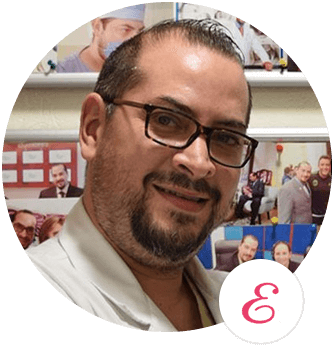
This article was medically reviewed by
Dr. Alejandro Castillo Peláez
Dr. Castillo is a Gynecologist, Obstetrician and Reproductive Biologist with advanced training across Mexico, the United States and Europe.
He completed his Medical Surgeon’s degree at UNAM, followed by a fellowship in Plastic Surgery for Gynecology at Northwest Memorial Hospital in Houston, where he gained specialized expertise in cosmetic and reconstructive gynecologic procedures.
He later pursued a fellowship in Reproductive Biology and completed a subspecialty in Assisted Reproduction Biology at IVI in Spain — one of the world’s leading fertility institutions.
Today, he treats American and Canadian patients every month across accredited clinics in Mexico City.
🙌 You're not alone — we’re here to guide you
Whether you're comparing clinics, navigating your options, or trying to understand what the next step should be, having clear medical guidance truly makes a difference.
Every patient who reaches out speaks directly with Dr. Alejandro Castillo Peláez or his international coordinator, Michaël — so your questions are answered by the people who are actually involved in your care.
Our role is simple: to help you access safe, transparent and personalized fertility treatment in Mexico, without overwhelm or guesswork.
Meet Dr. Alejandro Castillo Peláez
Dr. Castillo Peláez would like to connect with you for a consultation.
👇🏼 Book a consultation
Get answers to all your questionsabout fertility treatments in Mexico.
Thank you. We'll get in touch with you soon.
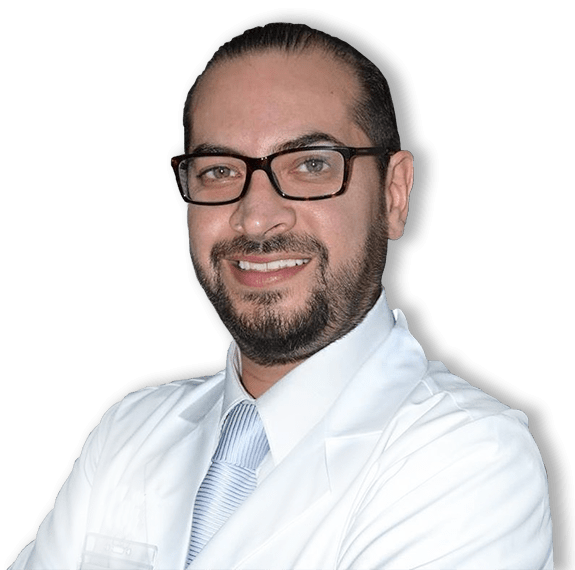
and reproductive biologist
Patient stories and testimonials
Read the great reviews from patients who have been fortunate enough to have Dr. Alejandro Castillo as their fertility specialist.