Simultaneous Surrogacy Programs for Gay Couples in Mexico City
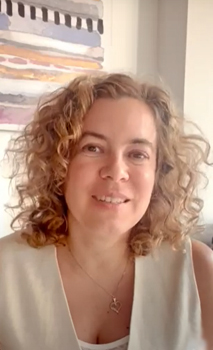
One egg donor, two dads, two surrogates, two babies at the same time. How a simultaneous surrogacy journey works with Dr. Castillo Peláez and Rafael Guzmán Romero, so each of you can be the biological father of a baby and your children grow up as half-siblings.
What is a simultaneous surrogacy program?
A simultaneous surrogacy program, also called tandem or dual surrogacy, is when a couple runs two surrogacy journeys at the same time, with two surrogates who are pregnant in parallel. It is a popular choice for same-sex male couples who both want a biological child.
The eggs come from one single egg donor and are split into two batches. One batch is fertilized with the first partner's sperm, the other with the second partner's sperm. An embryo from each partner is then transferred to a different surrogate. Each dad is the biological father of one baby, and because both babies share the same egg donor, they are genetic half-siblings, sometimes called twiblings. In Mexico City, both partners are named as parents on each baby's birth certificate.
Key facts
- One egg donor for both of you, so your babies are biological half-siblings.
- Each partner fertilizes his own batch of eggs, for example 16 donor eggs each.
- Two surrogates, each screened by Dr. Castillo Peláez, carrying at the same time.
- Both dads are named on each baby's Mexican birth certificate. No adoption is needed.
- One stay in Mexico City after the births, often for both babies, instead of two separate journeys years apart.
How simultaneous surrogacy works, step by step
Step 1, A free call with Rafael, then the medical consultation
Most couples start with a free call with Rafael Guzmán Romero, who is in charge of surrogate management and all legal aspects of the program. He explains how two journeys run side by side. The next step is the medical consultation with Dr. Castillo Peláez, which lasts over two hours. He reviews both of your histories, the egg package that fits each of you, and the plan for your two journeys.
Step 2, Choosing one egg donor for both of you
Dr. Castillo Peláez helps you select the donor. He asks for the traits that matter to you, such as ethnicity, skin tone, eye and hair color, height and education, and matches the donor as closely as possible. Clinic donors are proven and anonymous. If you prefer a wider choice or an identity-release donor, we can work with international egg banks, with the eggs shipped to Mexico City by our partner Tuxkuku. Read more about donor egg IVF.
Step 3, Two batches of eggs, one for each dad
Each partner chooses a donor egg package of 8, 12 or 16 eggs. The eggs are fertilized by ICSI, one batch with each partner's sperm, and the embryos are cultured to the blastocyst stage. Preimplantation genetic testing (PGT-A) is available as an option. Because two full batches usually means more eggs than one donor should give in a single cycle, the donor often goes through more than one stimulation, which is explained below.
Step 4, Matching two surrogates
We recruit our surrogates directly, without an agency, and each one is screened by Dr. Castillo Peláez himself. Matching is usually quick, anywhere from one week to one month. Each surrogate signs her own agreement with you before a Public Notary in Mexico City, with her own independent legal representation and her own Mutuus pregnancy insurance.
Step 5, Two transfers and two pregnancies
Both surrogates follow their hormonal preparation, and an embryo from each dad is transferred, one to each surrogate. The transfers are planned to be close together so the pregnancies run in parallel. Dr. Castillo Peláez follows both pregnancies, with the support of a maternal-fetal medicine specialist when needed. If a transfer does not result in a pregnancy, a frozen embryo transfer can be done with the remaining embryos from that dad's batch.
Step 6, Births, birth certificates and the trip home
Each pregnancy goes through its own legal process before a Mexico City Family Court, handled in parallel by the legal team. After each birth, the Civil Registry issues a Mexican birth certificate naming both of you as parents, then the Mexican passport follows, then your home country's passport. Plan about 4 to 8 weeks in Mexico City after the births. See the full surrogacy legal process.
Can one egg donor provide enough eggs for both partners?
Yes. One donor can provide a full batch for each of you, for example 16 eggs for each partner, 32 in total. It is just rarely done in a single cycle.
Dr. Castillo Peláez puts egg quality first. Retrieving more than about 30 eggs in one stimulation is possible, but it means pushing the ovaries hard, and quality can suffer when quantity is too high. A good stimulation protocol usually gives between 8 and 16 eggs, often around 12. So to reach two full batches, the same donor will most likely go through more than one stimulation.
Eggs or embryos from the first stimulation are vitrified, a fast-freezing technique, while the next batch is completed. Survival rates after vitrification are above 90 to 95%, so freezing does not have a negative impact on the results. Using the same donor across stimulations keeps both dads' embryos genetically linked through her.
Twiblings, half-siblings born close together
Twiblings is the word many families use for babies born close together to two different surrogates. In a simultaneous program with one egg donor, your babies share the same genetic mother and each has one of you as genetic father, so they are biological half-siblings, and they grow up as brothers or sisters of almost the same age.
The births are usually close, but rarely on the same day. Each pregnancy follows its own course, and the timing of each transfer and delivery depends on the medical situation of each surrogate. We plan everything so the two journeys run as closely together as possible.
Simultaneous or one after the other?
Some couples do two sibling journeys one after the other, with the second baby a year or more later. A simultaneous program has a few clear advantages for two dads. Both of you can be biological fathers at the same time, instead of one partner waiting years for his turn. The same egg donor is secured from the start, which is harder to guarantee years later. And you go through the stay in Mexico City and the paperwork once, often for both babies.
It also asks more at once. You run two programs in parallel, with two surrogates and two sets of phases, and you prepare for two newborns at the same time. Dr. Castillo Peláez and Rafael Guzmán Romero go through both options with you, so you can choose what fits your family.
The legal side for two babies
Surrogacy is legal in Mexico City for foreign, same-sex and non-resident couples. In September 2026, the Supreme Court confirmed the legal route with binding jurisprudence (P./J. 181/2026), so the process is the same whichever family court receives each case. Parentage rests on procreational will, which is why both of you are named on each birth certificate, whichever of you is the genetic father.
For your home country, the genetic link matters. Many countries pass citizenship through a genetic parent, and in a simultaneous program each baby has one of you as genetic father, which usually keeps that step simple. We have worked with same-sex couples from Canada, Portugal, Israel, Australia and the UK, and your babies receive the Mexican passport as well as the passport of your country. We recommend checking your own country's requirements early, and Rafael can coordinate with your lawyer at home.
How much does a simultaneous surrogacy program cost?
A simultaneous program is two full surrogacy journeys, one for each partner, each with its own surrogate, agreement, insurance and phases. Each of you chooses a donor egg package of 8, 12 or 16 eggs, so the price depends on the packages you choose. You pay for the egg packages, not for the number of times the donor is stimulated to complete them.
Each phase is paid as it begins, never the whole program upfront. You can see every phase and the program totals on the surrogacy cost page, and Michaël prepares a combined quote for your two journeys after the medical consultation. Embryo or egg shipping with Tuxkuku, PGT-A and other additional fees only apply if needed.
Common questions about simultaneous surrogacy
Can both partners in a gay couple be biological fathers?
Yes. In a simultaneous surrogacy program, each partner fertilizes his own batch of donor eggs, and an embryo from each is carried by a different surrogate. Each of you is the biological father of one baby.
Will our babies be related?
Yes. When both batches come from the same egg donor, your babies share the same genetic mother and are biological half-siblings.
Do you need a donor who already has 32 eggs?
No. To protect egg quality, Dr. Castillo Peláez avoids retrieving that many eggs in one cycle. The same donor usually goes through more than one stimulation, and the eggs or embryos are vitrified until both batches are complete.
Will both babies be born at the same time?
Usually close together, but rarely on the same day. The transfers are planned close to each other, and each pregnancy then follows its own course.
Will both of us be on each baby's birth certificate?
Yes. In Mexico City, the Family Court orders the Civil Registry to issue each birth certificate in the intended parents' names, so both of you are named on both certificates. The surrogates and the donor never appear on them.
What happens if one transfer is not successful?
If embryos remain in that partner's batch, an additional frozen embryo transfer can be done, with no new IVF cycle. The other journey continues as planned.
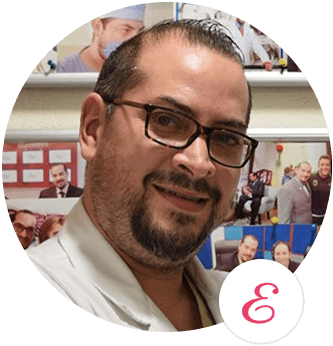
This article was medically reviewed by
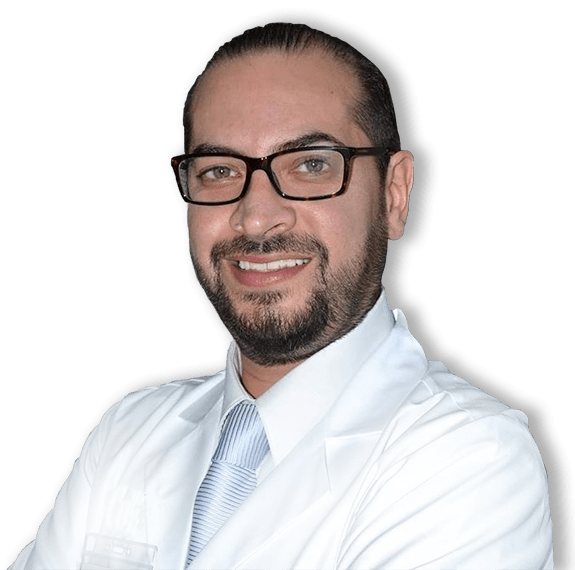
Dr. Alejandro Castillo Peláez
Dr. Castillo is a Gynecologist, Obstetrician and Reproductive Biologist with advanced training across Mexico, the United States and Europe.
He completed his Medical Surgeon’s degree at UNAM, followed by a fellowship in Plastic Surgery for Gynecology at Northwest Memorial Hospital in Houston, where he gained specialized expertise in cosmetic and reconstructive gynecologic procedures.
He later pursued a fellowship in Reproductive Biology and completed a subspecialty in Assisted Reproduction Biology at IVI in Spain — one of the world’s leading fertility institutions.
Today, he treats American and Canadian patients every month across accredited clinics in Mexico City.
🙌 You're not alone — we’re here to guide you
Whether you're comparing clinics, navigating your options, or trying to understand what the next step should be, having clear medical guidance truly makes a difference.
Every patient who reaches out speaks directly with Dr. Alejandro Castillo Peláez or his international coordinator, Michaël — so your questions are answered by the people who are actually involved in your care.
Our role is simple: to help you access safe, transparent and personalized fertility treatment in Mexico, without overwhelm or guesswork.
Meet Dr. Alejandro Castillo Peláez
Dr. Castillo Peláez would like to connect with you for a consultation.
👇🏼 Book a consultation
Get answers to all your questionsabout fertility treatments in Mexico.
Thank you. We'll get in touch with you soon.
and reproductive biologist
Patient stories and testimonials
Read the great reviews from patients who have been fortunate enough to have Dr. Alejandro Castillo as their fertility specialist.